

SEGA workers form union with nostalgic name
Quantic Dream on crunch and allegations, artist offers royalties for AI-generated songs, Tucker Carlson is out at Fox, and more

UPDATE 4/25/23: This newsletter has been updated with responses from the original Mediapart journalist behind the 2018 Quantic Dream reporting, from Activision Blizzard, and to note that an infinity stream on Twitch is not against the platform’s terms of service.
It’s an annual curse for me that I’ll come back from San Francisco with a reporter’s notebook full of material and no time to write them up. Thanks for bearing with me as I get back on my feet.
First off, SEGA workers filed with the National Labor Relations Board today to unionize, demanding better pay, benefits, career opportunities, fair hours and an end to repetitive crunch. The union is called the Allied Employees Guild Improving SEGA, or AEGIS for short.
The union name is a play on an old SEGA tagline, “To be this good takes AGES,” with AGES spelling SEGA backwards. It’s also an achievement players can win featured in games like Shenmue and Yakuza 6. (The name is not, in fact, a nod to the similarly-spelled Persona 3 character, Aigis.)

I spoke to employees about why they’re unionizing. More after the jump. It’s also a huge day in cable news, and we’ve got that below.
At 7AM on the Monday that kicked off the San Francisco Game Developers Conference last month, I sat down in person with Quantic Dream co-CEO Guillaume de Fondaumière and NetEase’s head of partnerships, Simon Zhu. We talked about the studio’s upcoming projects, its tainted reputation and about how developers avoid burnout and crunch. Here are some highlights from our conversation.
Last December, fans criticized the Game Awards for featuring a trailer of Star Wars Eclipse from Quantic Dream, which faced allegations in 2018 of employees circulating sexist and homophobic images, some including Nazi symbols, working overtime on weekends, and being wrongfully terminated in some cases. Mediapart wrote in a story1 in 2018, which Quantic Dream attempted to sue over libel, that David Cage, who had previously been described as “Godard of the pixel,” was actually a controlling boss who exhausted his employees with overwork. The company has vehemently denied the allegations.
In 2021, Quantic Dream won a libel suit against Le Monde over these allegations but lost one against Mediapart, as Kotaku reported.
“We have a great company culture,” Fondaumière said, echoing his 2018 comments. “These allegations were totally false, based on absolutely no facts… If you look on LinkedIn, look at how many people in our studio are working at Quantic Dream for seven, ten, fifteen, twenty years. Do you think that these people in the current market would stay at Quantic Dream if there was a bad, toxic work environment? Absolutely not. They would run away immediately and they would have ample opportunity to find a job.”
“You cannot always satisfy everyone on everything and sometimes people are just angry at something random and then maybe there is a problem,” he continued. “Game development is very difficult. It’s very difficult and I’m not talking long hours here. I’m talking fighting technology and being passionate and creating something out of the ordinary. Sometimes there are tensions in a team, tensions from management. Interpersonal relations are difficult and this is why we need to train our leaders and managers in the studio.”
French newspaper Le Monde did not immediately respond to a request for comment on the outcomes of the libel suits and its reporting.
“We still believe everything we wrote in this piece was right and well-researched, and as a matter of fact it is exactly what a French court said in September 2021,” said Dan Israel, one of the Mediapart journalists who worked on the 2018 Quantic Dream story, in a Tuesday email to this newsletter. “We did nothing but our job.”
Israel explained why Quantic won one libel suit and lost the other. At the time of the reporting, Le Monde and Mediapart interviewed the Quantic CEOs together but wrote separate articles. Le Monde included a few lines alleging a racial slur, which a judge ruled lacked evidence, causing the newspaper to lose its libel suit. Mediapart did not write about those allegations and won its suit.
Israel maintained that his story’s allegations “were rigorously based on testimonies and facts.”
Zhu said NetEase was satisfied with the results of an internal investigation, “otherwise, there will not be investment.” He said that he had personally visited the studio and not seen anything during his surprise visits.2
Fondaumière manages the business of Quantic Dream, while David Cage is in charge of the creative side. After the company was exclusive to PlayStation for twelve years, Quantic Dream began looking for a sale. Last August, it was acquired by NetEase after receiving investment from the Chinese company in the past few years.
“Honestly, I was a bit skeptical at the beginning,” said Fondaumière. “I thought, okay, let’s see, you know. But after working together for three, four years, we truly saw how this vision unfolded.”
Zhu is a self-professed hardcore gamer, and he drew attention last November, when he posted to LinkedIn his reaction to the NetEase and Activision Blizzard deal falling through, cutting World of Warcraft access for millions of Chinese gamers. Zhu wrote: “one day, when what has happened behind the scene [sic] could be told, developers and gamers will have a whole new level understanding of how much damage a jerk can make.”
At the time, I covered the story for The Washington Post, citing a leaked email from Blizzard president Mike Ybarra. Zhu said he was also a gamer who spent ten thousand hours in WoW, StarCraft and Overwatch and that he was “heartbroken” over the prospect of losing access to the games next year.
NetEase said it has completed refunds for over 90% of Chinese players within fifteen days of receiving their requests, as of February 23. It did not have data on how much money it has spent on refunding Chinese gamers over Blizzard titles, though I’ll update this newsletter if that changes.
Zhu said he’s interested in the genre of games that Quantic Dream specializes in, which is interactive drama, as an audience watching movies on streaming services could easily gravitate toward this genre. “Detroit Become Human was the first triple-A game my wife played with me,” Zhu said.
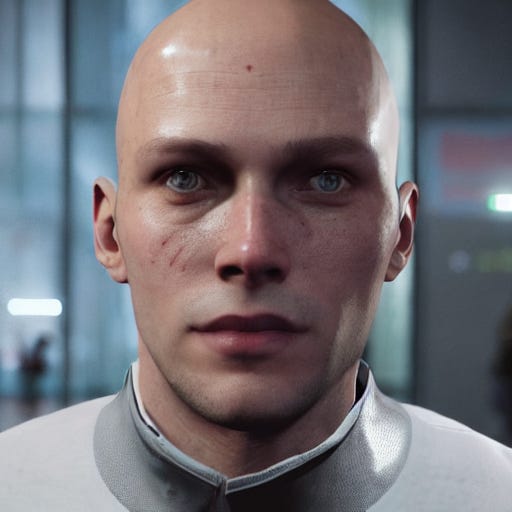
After the acquisition, Fondaumière said that Quantic can tap into the resources that NetEase has to offer, including working on AI and facial animation together. The studio is currently working on Star Wars Eclipse and other unannounced titles that will feature “high-end graphics,” Fondaumière said.
Zhu said that “unfortunately, as a bigger company,” NetEase has “more resources than talent,” which is the opposite problem that Quantic Dream has.
“We like to innovate and not repeat ourselves,” said Fondaumière of whether Quantic Dream will continue making interactive dramas. He added that the studio is known for never producing a sequel. “For our next titles, we want to explore narration, maybe in a different form.”
Zhu said that some talented people could be “working on a sequel for ten years, so many years that they burn out” and that his preference is for new stories, new universes and characters.
Zhu said that NetEase doesn’t provide quarterly guidance to investors so developers won’t feel pressured to crunch to meet internal deadlines.
“Why do you crunch? You crunch because there’s a deadline. As an independent developer, who was driving the deadlines? Honestly, our publisher. Because it’s about them receiving a milestone or receiving a payment and that’s when you almost don’t have a choice as a team, you have to get to that deadline,” Fondaumière said. “At Quantic Dream, when we were working with third-party publishers, one thing that helped us through in a healthy way on that subject is that we are paid extra hours and in France, we have a very, very strict labor law and you pay extra. So each time I was pressed for a milestone, I turned to my publisher, I was telling him, ‘Look we can meet that milestone but it’s going to cost you 25, 50, 75% more, what do we do?’”
I’ve written a lot about video game crunch in the past. Most notably, I wrote this feature about Diablo developers. I’ve also interviewed the God of War director on his thoughts and the former head of Apex Legends, Chad Grenier, on their thoughts.
Compared to China’s biggest gaming giant, Tencent, NetEase is more focused on developing games in-house rather than through external studios. Both Chinese companies are looking to grow their international profits as the domestic market faces unpredictable regulatory scrutiny, according to market research firm Omdia.
“We’re expecting increased efforts from NetEase on the console and PC games front, as it likely has been encouraged by the success of Naraka: Bladepoint,” said Chenyu Cui, a games senior analyst at Omdia.
If international players don’t know what NetEase is, company executives have no plans on changing this directly.
“Outside of China, we are not going to spend lots of money just to build a brand,” said Margaret Shi, NetEase’s head of investor relations. “Eventually [players will] realize that [all these games] actually come from NetEase.”
NetEase’s international market revenue makes up 11% of its PC games business and 8% of the mobile games business, according to Omdia. Blizzard games, excluding Diablo Immortal, make up 6% of NetEase’s entire game business. NetEase declined to share exact numbers but said that Blizzard’s games made up a single digit of its revenue.
For months after the fallout, both companies continued to make headlines about how their deal could no longer be renewed and about perceived slights. But for now, it seems both companies have finally stopped talking about it.
“It’s over. We actually hate to fight. You just keep harassing us. You still talk to the media. We don’t care,” Shi said in a March interview.
“We are confident we aren’t in breach of any licensing agreements,” said Activision Blizzard spokesperson Joseph Christinat in a statement. “The terms NetEase appears to be complaining about reflect standard industry practice and have been mutually-beneficial for years. While this persistent campaign by one former partner is disappointing and puzzling, it’s important to note that we have enjoyed nearly two decades of positive experiences operating in China.”
Continued from above — SEGA employees file for a union
…SEGA workers starting mobilizing in full force last year, temporary quality assurance tester lead Mohammad Saman told me. “I immediately hopping on board. I was like, this is exactly what we need here,” he said.
The National Labor Relations Board confirmed to this newsletter receipt of the union petition. SEGA of America did not return a request for comment.
Unlike unionization efforts at Activision Blizzard and ZeniMax, which have mainly been led by quality assurance testers, SEGA employees are hoping to unionize the entire studio and have already garnered support across different departments.
Saman, who has worked at SEGA since 2019, said, “My coworkers in [quality assurance] as well as a lot of other departments just felt like the work we do, as passionate as we are about it, is not sustainable.”
SEGA employees say they work on many projects that are understaffed. They are now seeking more conversations with management and recognition of their union.
“We are ecstatic to finally just be out in the open,” Saman said. “We are thinking of throwing a picnic.”
SEGA was not the only video game company with employees present at the Game Developers Conference in San Francisco looking to unionize. Following in the footsteps of ZeniMax, Activision Blizzard, SEGA employees say they hope they won’t be the last.
When the news was first announced online, many retweeted the union news favorably, though some complained that if workers unionized, they might create games more slowly.
Quick bites of news
There’s so much news and so few journalists left to cover them. In an effort to make your time on the interwebs a bit more coherent, I’m bullet-pointing some highlights I’ve seen in the past few weeks, as they pertain to internet culture, gaming, streamers, general news I’ve seen slip through the cracks, viral tweets and more. Unlike fully reported stories, where I make every effort to contact all parties involved, these quick hits are more like small summaries of things that have happened and are of note. This is by no means comprehensive. I didn’t even dig into the Discord leaks or Missouri tip site news, though those were huge.
Politics host Tucker Carlson is out at Fox News, following the network settling a defamation lawsuit from Dominion Voting Systems over false claims that the election was rigged. In strange timing, Don Lemon is out at CNN on the same day. CNN communications team contested Don’s statement on Twitter that no one in management “had the decency to tell me directly.” CNN said that Lemon was offered a chance to meet with management but chose to tweet instead. Lemon was also memed online for the weird formatting of his statement, which looked like he screenshotted a teleprompter. As my former CNN colleague Brian Stelter puts it, “this is the craziest day in cable news history.”
Buzzfeed News shut down last week.3 Vice World News is next, as it has been discussing shutting itself down in coming weeks, according to the Wall Street Journal. Fun tidbit from the Semafor newsletter: In 2014, Buzzfeed turned down a $650 million deal to be acquired by Disney and pissed off Bob Iger, according to former Buzzfeed editor-in-chief Ben Smith.
Last week, the internet was ablaze over an AI-generated song replicating Drake and The Weeknd’s vocals. Universal Music Group had the song pulled from multiple platforms, after it received hundreds of thousands of streams. Grimes has put a callout inviting people to use her voice on AI-generated songs and offered to share royalties, saying “I think it’s cool to be fused w a machine and I like the idea of open sourcing all art and killing copyright.” At any rate, this space is wild and full of weird news, which I plan to cover more of very soon.
In March, PewDiePie started streaming infinitely on Twitch. No, he’s not actually online at 3AM playing games to a small audience. He’s discovered a way to loop his videos so that mega-fans can watch him ad nauseam. His numbers are chump change compared to the 60,000 concurrents that xQc commands for playing Minecraft set to the tune of Juice WRLD, but since Pewd isn’t actually having to do any work, headlines have noted that the YouTuber has probably tapped into a infinite revenue stream. Twitch notes that if a content creator owns the rights to their own content, it’s not against the platform’s terms of service to hold an infinity stream.
I recently watched the Breaking Point documentary on Team Liquid, published on YouTube by HTC Gaming in 2016, as research for an upcoming esports pro player profile I’m working on for Vice (more on that soon!). The nearly 2 hour documentary, if you’re not familiar, details why League of Legends teams get so toxic and detrimental to mental health when all they’re trying to do is win.
The Washington Post’s video games section shut down last month, but you can still read this feature about Frost Giant here! I was supposed to fly down to Irvine last year to co-byline this piece with Mikhail, but sadly caught Covid from GDC, which ended up becoming a weird, bad tradition.
After a torrential downpour of negative news around trans people in the past few weeks, this story started popping up on my timeline. I’m sharing it here in case you needed a cute, uplifting story. It’s about a guy falling in love with a trans woman who is his best friend of 24 years.
Reader fan mail section
Had a source message me out of the blue “thank you for being one of the few good journalists left” prioritizing truth over clout. Which I will take! Thank you!
On that note, have a great night! I’ll be back very soon with regular updates to this newsletter. Oh, and Twitter is maybe still throttling links to Substacks. It’s also made tweets no longer embeddable in each issue of the newsletter. Fingers crossed that this changes and improves, at some point. Here are all my socials to stay in touch, though: linktr.ee/shannonliao
Which I purchased and read in French for this newsletter.
It is beyond the current scope of this newsletter to check on these claims, but I think it’s important to note here that there have been many instances of people staying at “toxic” work environments for decades and of random visits and internal investigations of companies to not lead to any evidence of wrongdoing, so these responses from NetEase and Quantic Dream don’t definitively prove anything. We are also in an economic downturn, which may make it difficult for people to leave their jobs, though Fondaumière suggests they could. In this interview, I asked powerful decision-makers in the gaming industry to answer publicly available allegations. Depending on the future funding of my freelance work, it may be possible to return to this and try again.
Yet, a top Apple News story yesterday was from Buzzfeed, asking people to share the pettiest lies they’ve ever told.